
PsychMed Care · Telehealth in 35 states + DC
Medication management that doesn't stop at stable.
Medication management from one doctorally prepared clinician, and nothing else competing for the visit. A full 60-minute evaluation to start, then focused 30-minute medication Follow-up Appointments: precise prescribing, tracked measures, targeted labs and GeneSight testing, and supplements that support the plan. Whether you're climbing out of a hard place or performing well and want more, the direction is the same: up.
The arc of medication care
Care that meets you at any point on the curve.
Most medication care stops at crisis and maintenance. This practice is built for the whole curve: get symptoms steady, tune the regimen until it truly fits, then go further than fine.
Wherever you start, we keep going, together. Getting better is the midpoint, not the discharge papers.
Integrated medication management
Medication management, done in full.
Most prescribers manage a medication list. This practice manages the whole medication picture: a full 60-minute evaluation, precise prescribing, tracked measures, targeted labs and GeneSight results folded into every decision, supplements reviewed like prescriptions, and deprescribing when a medication has done its job, all from the clinician who prescribes for you, so nothing gets lost in a handoff.
Medication management
Precise psychopharmacology
Thoughtful starts, careful changes, and deprescribing when it serves you.
No five minute refills
Follow-up Appointments run a full 30 minutes: your measures reviewed, side effects weighed, the dose adjusted with intention. Time to actually think, together, before anything changes.
A whole body lens
Labs, sleep, nutrition, movement, and physical health considered alongside the prescription.
Precision when it matters
GeneSight pharmacogenomic testing and targeted labs, thyroid, B12, folate, vitamin D, iron, metabolic markers, plus evidence-guided supplements through Fullscript, so decisions rest on your biology, not averages.
Honest expectations
What a medication can do, what it can't, and how we'll know it's working.
Monitoring & fine-tuning
Measurement-based care
Brief standardized measures, the same screeners on this page, tracked at every visit, so adjustments follow your numbers, not impressions.
A plan with targets
Every medication has a target, an expected timeline, and a clear way to tell whether it is earning its place in the plan.
Supplements, integrated
Evidence-based supplements, magnesium glycinate, L-theanine, NAC, omega-3s, chosen to support the plan, checked for interactions, dispensed through Fullscript.
Safety at every step
Every change is screened against your full medication list, your supplements, and your history before it is made. Safety is a step, not an assumption.
"One clinician who knows your whole medication picture, every dose, every lab, and the reason behind each one."
Functional psychiatry
Precision tools most psychiatry never touches.
Mental health runs on biology as much as biography. These are the instruments I use to see yours clearly, so treatment is tuned to your body instead of the average body.
GeneSight pharmacogenomic testing
A simple cheek swab that shows how your genes metabolize psychiatric medications: which are likely to behave as expected, and which may need a different dose or a different choice. It doesn't pick your medication; it removes months of guessing. I'm a GeneSight provider and order it when it will genuinely change decisions. About GeneSight
Targeted labs
Thyroid, B12, folate, vitamin D, iron, metabolic and inflammatory markers: physical drivers that can imitate or amplify psychiatric symptoms. Drawn at a lab near you, interpreted in the context of your whole picture.
Evidence-guided supplementation
Where the evidence supports it: magnesium glycinate, L-theanine, N-acetylcysteine (NAC), low-dose lithium orotate, omega-3s and more, dosed and interaction-checked like any prescription, to support your medications and your nervous system. Every supplement is dispensed through Fullscript, whose catalog is independently quality-tested, so recommendations draw only from verified, highest-quality products you can rely on.
This is the engine behind the Optimize stage, and it's available at every stage of care.
What I treat
From the conditions that derail lives to the friction that limits them.
OCD & intrusive thoughts
Medication management from a clinician who treats OCD as a specialty, not a sideline.
Bipolar disorder
Careful stabilization, relapse prevention, and a life that's bigger than the diagnosis.
Depression
From first episode to treatment-resistant. Medication management and the whole-body factors underneath.
Anxiety & panic
Unwinding the alarm system instead of just muffling it.
Trauma & PTSD
Trauma-informed medication management, paced to your nervous system and built on stability first.
ADHD
Certified ADHD specialist care: accurate assessment, honest medication decisions, real-world systems.
Addiction & substance use
Judgment-free, motivational, and integrated with your mental health care rather than split from it.
Sleep & insomnia
Because almost nothing improves while sleep stays broken.
Also: grief and loss, eating concerns, anger, stress and burnout, identity, maternal mental health, chronic illness, and more. I see older adolescents (17+), adults, and seniors, and this is an LGBTQIA+ affirming practice. First responders have a page of their own: medication management for police, fire, EMS, dispatch and corrections, private from employers and built around shift work. Quitting smoking has a page of its own: medication help to quit smoking, prescribed and adjusted alongside your psychiatric medication. Not sure where you land? Take a two-minute screener below.
Check in with yourself
Free, private screeners. A few minutes to a clearer picture.
These are the same validated tools used across medicine, and the same measures I track from visit to visit in your medication care, so progress is something we can see, not just feel. Your answers are scored right here on your device, never stored, and only shared if you choose to send your results to me at the end.
A screener is not a diagnosis. Only a full evaluation can diagnose, and a low score never means what you're feeling doesn't matter. If you are in crisis, skip the questionnaires: call or text 988, or call 911.
Starting medication
Put yourself on the curve.
Medication is judged against where you started, not against how last month feels in memory. Set your day one baseline here, in about a minute, and take it to your first follow-up.
What do you want treatment to change? Pick up to three.
General information about how the first weeks often go, not advice about your medication. New or worsening symptoms that feel unsafe are always a reason to contact your clinician promptly, or in an emergency call 911 or 988.
Your first visit
A real conversation, not an interrogation.
Book
Complete the intake forms, then pick a time in the booking section. Insurance is verified before your first visit, so there are no billing surprises.
The conversation
You get a full 60 minutes. What brought you in, your history, your physical health, your sleep, what you've tried, and what a good outcome would actually look like for you. Share as much or as little as you're ready to.
Decisions, together
Will you leave with a prescription? Sometimes, when it's clearly right. Often I'd rather understand the whole picture first, because rushing that step is how people end up on the wrong medication.
A direction
You leave knowing what I think is going on, what the options are, and exactly what happens next. Not vague reassurance. A plan.
Build your prep list
Thirty seconds of taps, and you'll walk into the first visit with everything that helps.
Currently taking psychiatric medication?
Seen a psychiatric provider before?
Using insurance?
What brings you in? Tap all that apply.
All packed. See you at the first visit.
Straight talk
Six myths, flipped.
Tap any card. These are the beliefs that keep good people from getting great care.
About Karel
Two decades in medicine. All of it behind your medication plan.
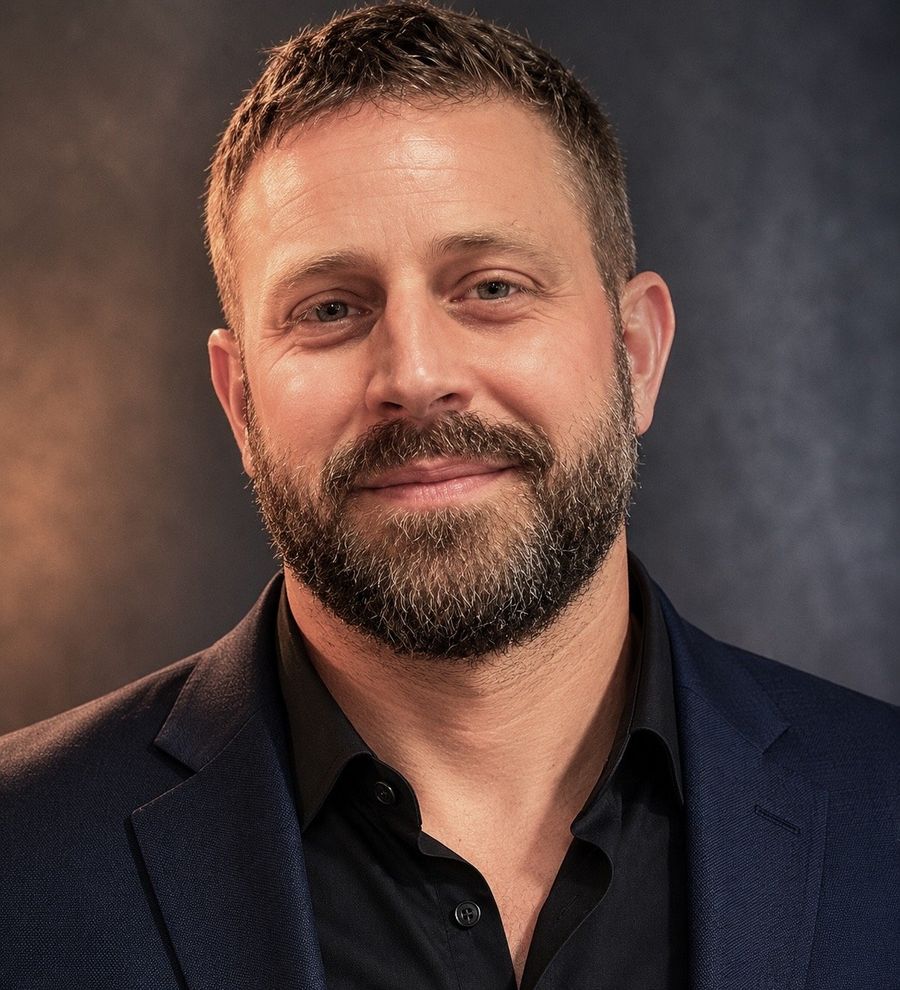
I came to psychiatry the long way: podiatric medicine in England, then diagnostic sonography, including seven years at California's largest county hospital, a Level I trauma center, where I read hearts, vessels, and unborn patients while teaching the next class of sonographers. Then acute inpatient psychiatry. Then this practice. I've seen the body from the inside out, and it changed how I treat the mind. Your labs, your sleep, your nutrition, and your nervous system aren't side notes to your mental health. They're the terrain.
I built Solutions Psychiatry to be the practice I couldn't find: one clinician doing precise medication management, with labs, supplement support, and tracked measures woven into the same unhurried visit, licensed across the country so your care doesn't end when your zip code changes. I see older adolescents (17+), adults, and seniors.
The training never stops, because your care shouldn't plateau. A doctorate from Vanderbilt, graduate teaching in advanced pharmacology, and deep specialty training across ADHD, autism spectrum, addiction, and trauma-related conditions, with Vanderbilt's family practice program in its final stretch and the Institute for Functional Medicine curriculum underway, because medication decisions are only as good as the biology underneath them.
He/him. Direct when it helps, gentle when it matters, and honest always.
Doctorate & graduate education
Specialty certifications
A former life in the body
In training now
Coverage
Licensed in 35 states and Washington DC. In network with the majors.
Almost all visits are secure video. Type your state to check instantly, or tap it on the grid.
Select or type a state to check coverage.
National networks
The Blue Cross Blue Shield family
Regional plans
Medicare & Medicaid
Credentialing expands constantly, so this list only grows. Your specific plan is verified before your first visit. Not sure? Email [email protected] with your plan name and I'll check.
Don't see your plan? Check out-of-network benefits
If your insurance isn't listed above, you may still be covered. Many plans reimburse out-of-network care, and this checks yours in about a minute, right here, secure and HIPAA compliant.
Powered by Mentaya
Fees & logistics
Simple, transparent, verified up front.
New patient evaluation
$350 self-pay
A 60-minute Comprehensive Initial Appointment: your history, your health, and a clear direction by the end.
Follow-up Appointment
$250 self-pay
Never a rushed refill. Follow-up Appointments run a full 30 minutes, with brief focused therapy inside the visit.
With insurance
$0 to $40 typical copay
The range for the majority of plans, though it varies. Your individual insurance is verified before the appointment, so you'll know your exact copay in advance.
Visit type
How you'll pay
Your plan
Your estimate
$350
All-inclusive and transparent. No facility fees, no surprise balance later.
Hours (Central Time)
- Mon
- 7:00 am to 7:00 pm
- Tue
- 7:00 am to 7:00 pm
- Wed
- Closed
- Thu
- 7:00 am to 7:00 pm
- Fri
- 7:00 am to 7:00 pm
- Sat
- 7:00 am to 1:00 pm
- Sun
- Closed
Contact
Questions
The short answers.
Do you do therapy or medication management?
Medication management: that is the whole focus of this practice, and every visit is with me, the clinician who prescribes for you. Comprehensive Initial Appointments are a full 60-minute evaluation, so your plan starts from the whole picture. Follow-up Appointments run 30 minutes and include brief focused support as part of the medication visit, but ongoing therapy is not offered here. If therapy is what you're looking for, that work lives at Solutions Psychiatry (psych.us).
Is everything virtual?
Almost everything, yes. This practice is telehealth by design: visits run on secure video across 35 states and DC, and your care continues if you move within that map. The one exception comes from federal and DEA requirements for controlled substances, which call for an in-person visit, typically once a year. Those visits happen by arrangement, not on a fixed office schedule: I see patients in person in different states to meet those requirements, planned together well in advance rather than springing on you.
Do you take my insurance?
I'm in network with Aetna, Cigna, UnitedHealthcare and Optum, the Blue Cross Blue Shield family across more than a dozen states, Oscar, Oxford, Carelon, Providence, and many more, plus Medicare in Colorado, Idaho, North Dakota, Texas, and Virginia, and Medicaid in Oregon and Wyoming. Every plan is verified before your first visit; copays for the majority of plans land between $0 and $40, and you'll know your exact number up front.
Will I get a prescription at the first visit?
Sometimes, when it's clearly the right call and you're comfortable. Often I'd rather use the first appointment, a full 60 minutes, to understand the full picture before starting or changing anything. We decide together, and nothing happens without your understanding.
Who do you work with?
Older adolescents (17 and up), adults, and seniors. People rebuilding from a hard place, and high performers who are functioning well and want to function better. This is an LGBTQIA+ affirming practice.
Do you offer genetic testing or lab work?
Yes. I'm a GeneSight provider for pharmacogenomic testing, a cheek swab that shows how your genes affect medication metabolism, and I order targeted labs: thyroid, B12, folate, vitamin D, iron, and metabolic markers that influence mental health. Where the evidence supports it, I also use supplements like magnesium glycinate, L-theanine, N-acetylcysteine, and low-dose lithium orotate to support treatment.
What if I'm in crisis right now?
Call or text 988 (Suicide & Crisis Lifeline) or call 911. Solutions Psychiatry is not an emergency service, and getting you immediate help matters more than anything on this page. Full crisis resources, including state-specific lines and LGBTQIA+ and veteran options, are in the crisis section just below.
Nothing matches that yet. Try a different word, or just email [email protected].
If you're in crisis
Right now, help is three taps away.
You don't need an appointment, a diagnosis, or the right words. Pick whichever way of reaching out feels easiest. These services are free and answer around the clock.
In immediate danger? Tap to call 911The Trevor Project, for LGBTQIA+ young people
Veterans Crisis Line
Resources for your state
While you decide, steady the body
Name 5 things you can see, 4 you can feel, 3 you can hear, 2 you can smell, and 1 you can taste. Then breathe with me for sixty seconds.
More crisis resourcesIf any number ever fails, 911 always works. Solutions Psychiatry is not an emergency service, and reaching out to any of these is a strong move, not a setback.
Book
Choose a time. Everything else is handled.
Scheduling runs on IntakeQ. Three quick steps: sign the treatment intention agreement, share your preferred days and times, then complete the intake forms and consents. When those are done, pick any open slot in the calendar below; returning patients can head straight to it.
Set the intention
Two minutes. The intention we start from, what I commit to you, and what the work asks of you. Your signed, dated copy files into your chart.
Choose your preferred times
Tap the days and times that fit your life. Your preferences file into your chart, so scheduling can match you.
Complete your intake forms
The Patient Intake Form and Consents unlock scheduling and take about ten minutes.
Open intake formsScheduling access
Request Access to Self-Schedule
Self-scheduling opens with an access code. Email [email protected] or text (800) 303-3221 to request one.
The scheduler is taking a moment to load. Open it directly instead:
Questions first? [email protected] or (800) 303-3221.
"You won't leave with vague reassurance. You'll leave with a direction."
Your Preferred Days & Times
Tap everything that fits your life. Your choices file straight into your chart, so scheduling can match you before you ever open the calendar.
Your time zone
Preferred days
Preferred times
The Treatment Intention Agreement
This is a treatment intention agreement: the intention we start from, what I commit to you, and what the work asks of you. Nothing here is fine print, and nothing here is about money; billing, scheduling policies, privacy notices, and formal consents live in your intake forms, where they belong. Every line here has one purpose: your outcome. Read it, then sign at the bottom.
The intention we start from
By signing, you are voluntarily choosing to pursue mental health and wellness care at Solutions Psychiatry and to work, together, toward goals we define and refine as a team. You authorize your Solutions Psychiatry clinician to provide the services we together consider necessary and advisable. For patients under 18, a parent or legal guardian also consents and signs. Care is always a choice, and it stays your choice.
What I commit to you
- Unhurried visits where you're a person first, never a time slot.
- Evidence-based, whole-person care: medication management with brief focused therapy inside your visits, labs and testing when they'll change decisions, and honest answers about what I recommend and why.
- Straight talk. If something isn't working, I'll say so, and we'll adjust together.
- Your honesty will always be met with problem-solving, never judgment.
- A deliberately small practice, so the attention you receive is real.
What this work asks of you
I can be genuinely helpful, but only with the full picture. The more openly you share, the better your care gets. So this is the heart of the agreement:
- Be as open and honest with me as you can. I cannot treat what I cannot see.
- Show up. Attend your scheduled appointments; they are the engine of your progress.
- Work the plan we build together. Treatment here is a joint design, not a prescription handed down. If part of it isn't working for you, tell me and we'll redesign it.
- If medication is part of your plan, take it as prescribed, and if you stop or change it, tell me. There is no penalty for honesty here, ever. Knowing you've stopped a medication is vital clinical information, and telling me is the responsible move, not a confession.
Medication history access: the one non-negotiable
You consent to my accessing your medication history through prescription records and monitoring systems. This is the single non-negotiable in this practice, and here is the plain reason: I cannot prescribe safely, catch dangerous interactions, or optimize your medications and supplements without an accurate, current picture of what's in your body. It's the same reason a pilot never skips the pre-flight checklist. If you prefer not to consent to this, I respect that completely, and it means Solutions Psychiatry isn't the right practice for your care.
Staying active: the 90-day standard
I intentionally cap how many patients I take on. That is what makes individualized, specialist-level care possible, and it means every spot on my active panel is limited and spoken for by a waitlist. Meaningful psychiatric care requires momentum, so active care here means at least one appointment every 90 days.
If 90 days pass without a visit, then on day 91 your care with Solutions Psychiatry concludes automatically and your panel spot passes to someone on the waitlist. This is not a punishment, and it does not mean anything is wrong with you. It simply means this style of care isn't the right fit for you right now, and that's okay; life has seasons. If you later reach a point where engaged, momentum-based care is the right step, you're warmly invited to request to re-establish care. I'll be honest: a spot isn't guaranteed, because spots go to those ready to use them.
So there are no surprises, here is exactly what happens if care concludes this way: this agreement serves as your advance written notice of the policy; you'll receive a closure notification; your records transfer promptly to any new provider on request; refills after closure are handled through your primary care provider, urgent care, or an emergency department; and crisis support never closes: 988 and 911 are available day and night.
Missed appointments
Your appointment time is reserved entirely for you, which means it is unavailable to anyone else, and appointments are where the work actually happens. So one clear expectation: three missed appointments within 12 months concludes care automatically. After that, medication refills are handled through your primary care provider, urgent care, or an emergency department while you arrange care elsewhere. Not a judgment; stewardship of limited specialist care. Cancellation windows and scheduling logistics are covered in your intake forms.
This is outpatient care
Solutions Psychiatry is an outpatient practice: no 24-hour coverage, no crisis team, no emergency response. If you are in crisis, in danger, or having thoughts of harming yourself or someone else, use acute services first, before anything else: call or text 988, call 911, or go to your nearest emergency room. Contacting this office is never a substitute for emergency care, and waiting for a reply could cost time you need. Your safety plan comes first, always.
What to expect, honestly
Done well, this work reduces distress, improves relationships, sharpens coping, and builds a life you're not just surviving. It is also a marathon, not a quick fix: progress takes time, effort between visits, and honest course corrections, and no ethical clinician can guarantee outcomes. What I can guarantee is my full attention, the best available evidence, and a plan we adjust until it fits.
Ready? Sign below. Your signature means you've read this, had your questions answered, and are choosing this work voluntarily, as a partner in it. A signed, dated copy files directly into your chart.
Typing your full legal name acts as your electronic signature.
Date:
Opens the official signature form; it takes about a minute and files straight into your chart.